Most AI in customer support still behaves like a visitor.
It shows up, answers a question if it can, and then disappears. The conversation resets. Context is lost. When a human finally steps in, the customer often has to start over.
We wanted something different.
We wanted an AI that could sit inside the same environment as the rest of the team one that could read the full conversation, draw from the company’s knowledge, keep context across messages, and know when to step back so a person could take over cleanly.
That is what we are building with Theo.
Not another chatbot
A chatbot is designed to respond.
Theo is designed to participate.
That difference shapes almost every decision we make.
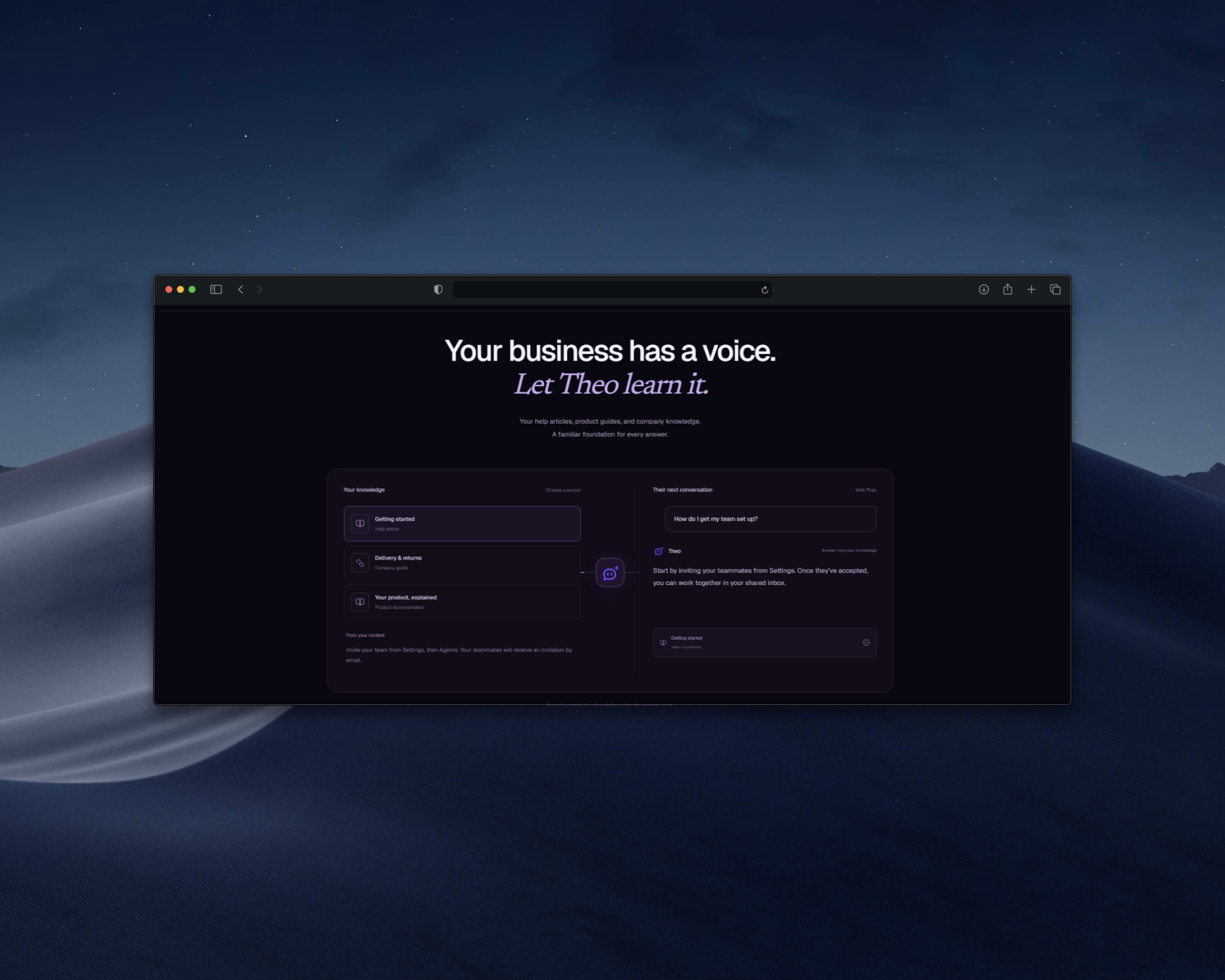
When a customer asks a question, Theo does not simply generate a reply. It looks for the answer in your actual knowledge help articles, product guides, internal documentation and grounds its response there. If the customer follows up, the conversation continues without starting from zero. Context stays intact.
And when the moment calls for a human, Theo does not just disappear. It hands the conversation over with everything that has already been said, so the customer does not have to repeat themselves.
The goal is not to keep the AI in the conversation at all costs.
The goal is to make the overall experience better.
Understanding before answering
Good support starts with understanding.
That means knowing what the customer has already shared. It means knowing what your business has already documented. And it means knowing the limits of what an AI should handle alone.
Theo is built around those three things:
- Answers drawn from your knowledge
- Context that carries forward
- A clear path to a human when it matters
This is why we do not treat Theo as a replacement for your team. We treat it as a teammate one that can take the repetitive, information-heavy parts of the work so your people can focus on the moments that require judgment, empathy, or deeper problem-solving.
The handoff is part of the design
One of the most important things an AI can do in support is recognize when it should stop.
Many systems are optimized to stay in the conversation. Theo is designed to leave it gracefully.
When a customer asks for a person, or when the situation moves beyond what the knowledge base can reliably answer, Theo makes space. The conversation moves to your team with the full history attached. Nothing is lost. The customer does not have to re-explain.
We believe this is not a secondary feature. It is central to making AI useful in real support environments.
Built to work inside the workflow
Theo is not a separate window or a disconnected bot.
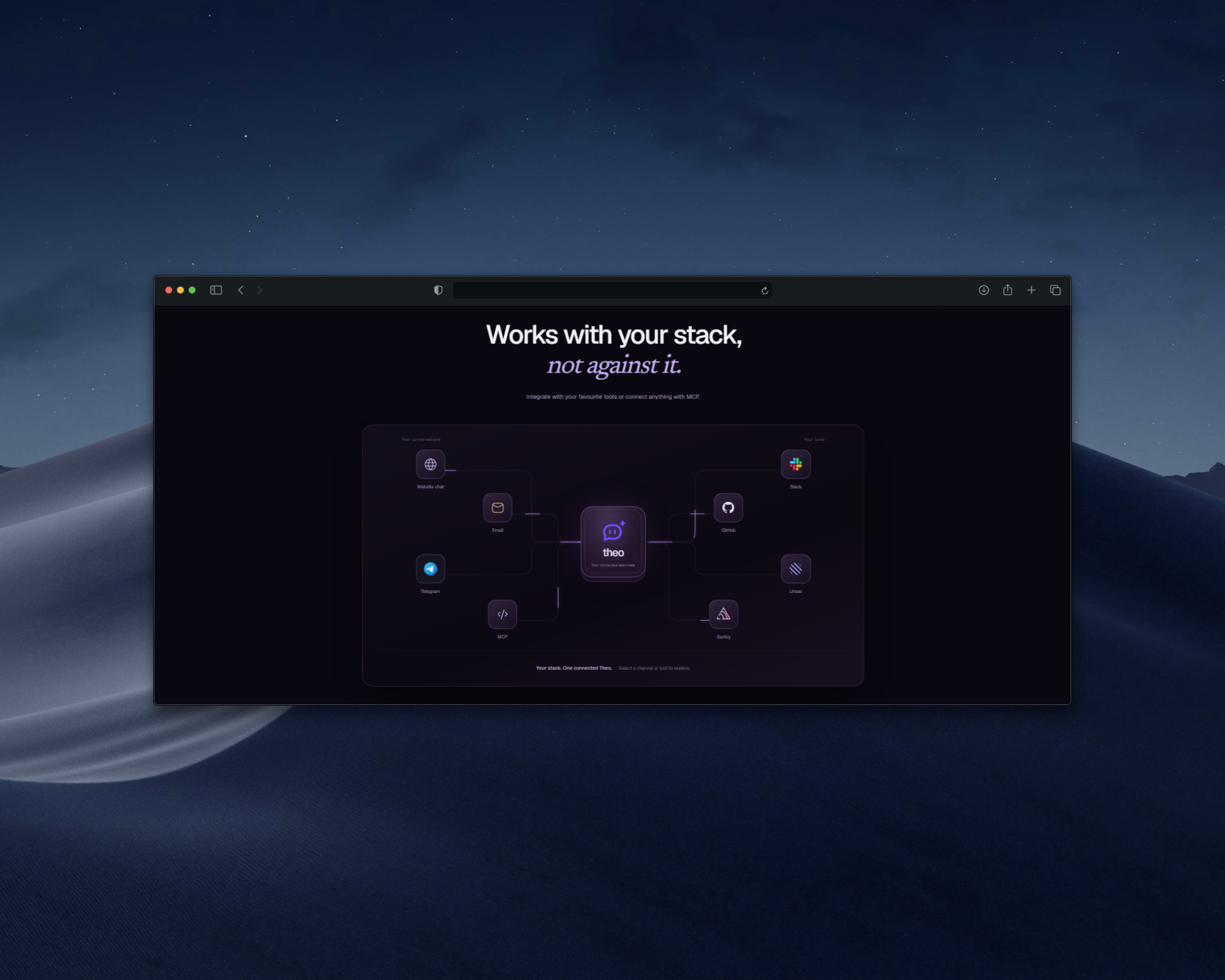
It lives inside the same inbox as your team. It sees the same conversations. It draws from the same knowledge. And it follows the same principle: the customer should feel like they are talking to one coherent support experience, whether the reply comes from Theo or from a person.
That is the direction we are focused on.
Not AI that tries to do everything.
Not AI that sits on the side and offers suggestions.
But AI that can operate inside the actual support workflow with shared context, clear boundaries, and respect for when a human should take over.
Still early
We are still early in this work.
There is more to improve in how Theo understands complex situations, how it uses tools, and how it collaborates with teams over longer periods of time. The systems around agents memory, permissions, observability, evaluation are still being figured out across the industry.
But the core idea is clear.
We are not trying to build a more impressive chatbot.
We are trying to build an AI teammate that makes support feel more continuous, more informed, and more human even when the first response comes from software.
That is what we are building with Theo.